
Lights out for little ones!
Sleep is essential for your child’s physical, mental, and emotional well-being as it supports growth, learning and memory, as well as impacting their behaviour.
For some babies and young children sleep comes relatively easily, but for others good sleep habits (known as sleep hygiene) can take longer to establish. All children are different; medical needs, and special needs and disabilities, can impact sleep.
Firstly, it is good to know how much sleep your baby or child should be getting. The NHS has provided a Sleep requirements guide by age group (remember for babies and toddlers, sleep includes daytime naps!).
Newborns and very young babies are naturally going to wake at night for milk, but even once a baby has stopped requiring night-time feeds, they might wake for other reasons and may need help to fall back to sleep.

Common advice amongst medical professionals is that establishing suitable bedtime routines is key to teaching good sleep hygiene.
Some children seem to need more or less sleep than others, so ensure you establish a bedtime routine appropriate for your child and the needs of your family.

Top tips:
- Start your routine ideally around one hour before the intended bedtime: begin ‘winding down’ with your child by switching off all electronic devices and putting noises toys away
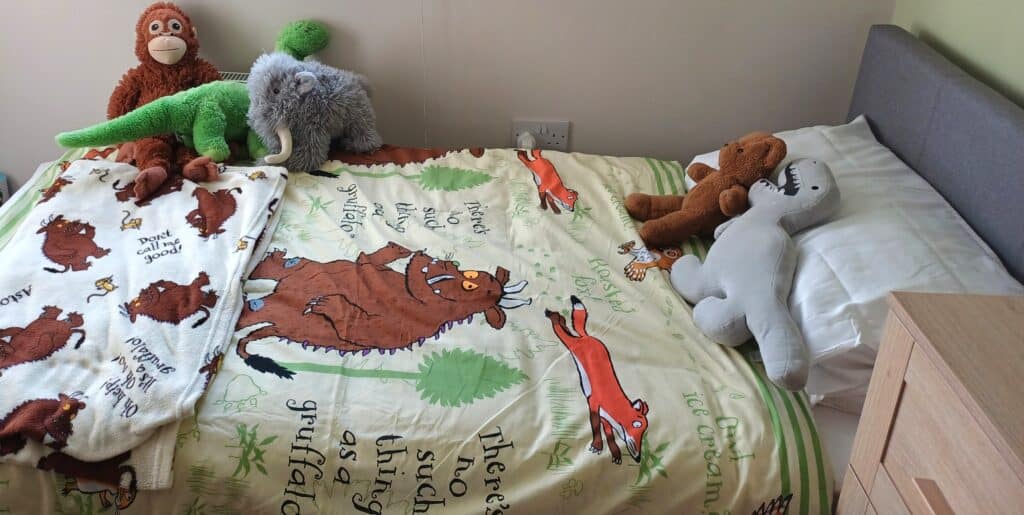
- Use some imaginative play: your child can put their favourite toys ‘to bed’ and say ‘goodnight, see you in the morning!’
- Help your child to relax: give them a warm bath, and a nice cuddle!
- Help your child feel comfortable: a fresh nappy (if appropriate) and clean clothing
- Help your child’s body recognise its own signals: dimming lights and closing curtains/blinds helps the body recognise it’s time to sleep, by promoting the release of the sleep hormone Melatonin – your child will soon start rubbing their eyes and yawning
- Read some bedtime stories: this is not only enjoyable for you and your child, but also supports early literacy: Enjoying Bedtime Stories – TLC
- Sing some gentle rhymes such as ‘Twinkle, Twinkle, Little Star’ : this supports early language development and can help your child to drift off peacefully: Talk, Listen, Cuddle Nursery Rhyme Cards – TLC

If your child struggles to settle down:
- Consider if they could be hungry: a small snack before bed, such as a slice of toast or small bowl of cereal, may help
- During the summer months: if your child is more sensitive to light this can particularly be a problem in the lighter evenings and mornings, so blackout curtains/blinds are useful to try
- Keep a sleep diary: doing this over 2 weeks can help with identifying any potential causes if your child is struggling to fall asleep or waking up in the night: Sleep Diary for Kids – The Sleep Charity
- Introduce a checklist or visual timetable: these can be helpful if your child is having trouble following a routine due to sensory processing difficulties and differences, or developmental delays: Useful Resources – The Sleep Charity
- Remember: same as with any routine, it may take several weeks to get right, and bouts of illness, teething and growth spurts can affect sleep
- If bedtime battles become prolonged and it is affecting you or your child’s wellbeing: please seek professional support from your local Family Hub
FAQ:
My child is Neurodivergent, what can I do to help them sleep?
Like all young children, those who are Neurodiverse will benefit from consistent bedtime routines, but they may also need additional strategies in place. Here are some useful links to help you:
Understanding ADHD, Autism and other Neurodiverse conditions in Small Bites (type ‘sleep’ into the search bar to see relevant resources)
The National Autistic Society’s Sleep Guide for Parents of Autistic Children