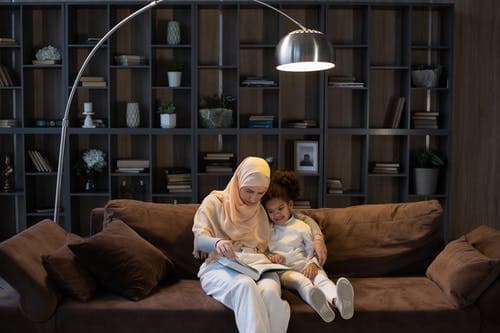
The gift of language!
The language you speak with your child is the first language they will learn. It is their first connection to you, to the rest of their family, and to their culture and community.
Home language is what your child will first use to learn about the world around them and helps them get ‘set for life’ – you as their parent are a central part of that process!

More children in the world grow up bilingual or multilingual than monolingual. Having your home language and English as an additional language (EAL) is something to be celebrated, promoted and supported. As well as this, it has many educational benefits.
FAQs:
What are the benefits of using home language?
Using your home language connects your child to your family. It also provides a connection to your important cultural traditions, and to friends and neighbours who speak the same language.
Using your home language allows you to teach your child and to learn new things together. You can talk about new experiences and words; you can practise letters and numbers.
All of these things are an important part of your child’s early learning – and it will be easier and more fun if you do it in your most comfortable language.
Will my children get confused using two languages?
Young children can learn two or more languages at the same time. They learn quickly when they have lots of experiences with adults who speak with and listen to them.
Sometimes children will combine words or phrases from both languages – that’s OK! It may sound as though they are confused, but they are actually learning the rules and vocabulary from both languages and sorting them out in their brains. It is a sign of good learning and thinking.
If there is more than one language spoken in my home, will my child’s speech and language development be affected?
Research tells us that speaking more than one language benefits children. Hearing more than one language from an early age means that children naturally learn to use all of these languages. The learning of any language comes from the exposure a child has to that language, so the more they hear a language, the more confident they will be to use it. It is common for children to understand more of a language than they speak.
It is also natural for children to mix languages up when they first learn to talk, it is just because they have a choice of words to use. They will soon learn which words belong to each language.
What can I do at home?
Tell stories and read to your child in your home language. Share rhymes, chants, songs, and poems you learned as a child.
Look for fun activities happening in your language, such as story time at your local Essex Library, local festivals and cultural events. Look for bilingual books, wordless books, or books in your home language at your local Essex Library.