Feelings and emotions matter!
Learning to manage emotions is a really important skill for your child and will help them to build positive relationships with others, adapt their behaviour to different situations, enjoy trying new challenges, and explore learning as they grow.
Children learn how to manage big emotions through feeling safe and secure in their relationships with the key adults in their life.

In these situations, the part of your child’s brain that deals with emotions takes over and the logical thinking part of the brain can not function until your child feels safe again.
Before they get back to this point your child simply can’t listen to your reasoning, or say what will make it better, or explain why they did something or how they are feeling.
Over time, as your child learns how to manage with your support, they will gradually begin to learn how to manage for themselves.

Top tips:
- Acknowledge how your child feels: even if the big emotion is over something that seems very small and insignificant to us as the adult, your child’s favourite teddy in the wash may well feel like a complete disaster to them! By saying, ‘I can see you are feeling very sad because you wanted teddy’ acknowledges how they feel and puts a name to the emotion – it also lets your child know it is ok to feel like that and you understand
- Demonstrate that feeling big emotions is okay: try not to give your child a screen such as iPad or phone to calm them, instead modelling different ways to manage the emotion will help them when they experience these feelings again
- Recognise how your child communicates their emotions: some children may become very quiet when they are overwhelmed or may become very energetic – by recognising these signals and then trying different activities such as going for a run around the park, jumping on a trampoline, or sitting in a quiet space when they are feeling overwhelmed, will help you to support your child next time (this takes time for you to both recognise and work out what you need, and that’s okay!)
- If your child can’t express how they are feeling: look out for clues in their behaviour and ask adults at their childcare setting or school to do the same
- Offer comfort to your child: you might try cuddling them, rubbing their back, stroking their hair – repetitive actions can be very soothing – until you can feel calm returning
- If your child does not like touch: sitting quietly close by them can be very reassuring until they are ready to interact again
- Distract your child: doing a different activity can be very useful at this point, but be wary that giving lots of choices when your child is still feeling that strong emotion will just add to the overwhelm for them
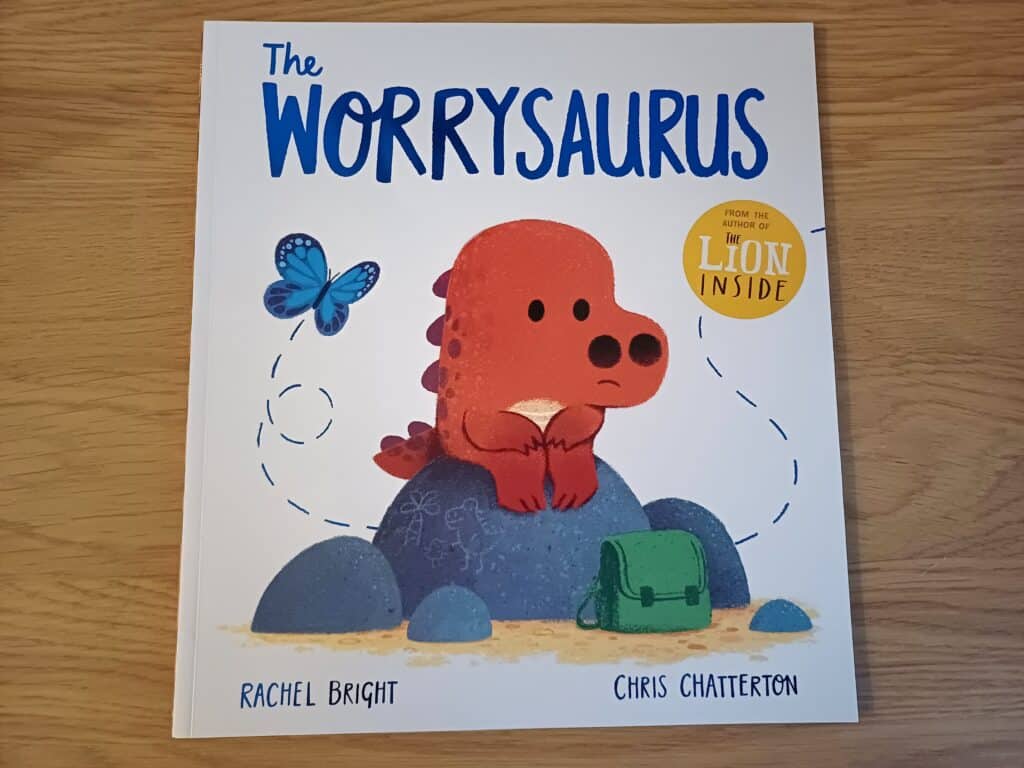
- Share stories about emotions with your child: reading books such as The Worrysaurus by Rachel Bright helps your child to be able to recognise different emotions – it also develops their vocabulary to name and talk about emotions
- Different situations: all children have different situations or places/times they find tricky to manage (an activity or a trip out that was fine one day, may not be fine the next) and it can be difficult to manage our frustration as your child’s emotions may seem to make no sense – they are very real to your child though, and they are relying on you to help them move through it safely
- Keep calm: it’s important that as the adult we stay calm and in control of our emotions, so that we can respond consistently and fairly when it has all become ‘a bit much’ for our child