Sounds, syllables and songs!
Phonological awareness is being able to hear and distinguish sounds in words and sentences such as rhyme and alliteration. This is an auditory skill; what you can hear, not what you can see and read.
Phonological awareness is not the same as ‘phonics’ which is the sound of a letter, for example the letter ‘S’ makes the ‘ssssss’ sound. The skills developed during phonological awareness games build a strong foundation before your child learns phonics at school.
Phonological awareness is a crucial stepping stone in helping your child develop skills for learning phonics. In fact, research shows if a child has a strong foundation of phonological awareness, they will learn the skills needed for reading and writing quicker.
At this stage, young children should not be expected to read or write anything, the focus is on hearing and recognising sounds. Below are some practical activities to develop your child’s hearing skills to recognise that there are different sounds.
Activities you can do at home to develop phonological awareness:
Listening for sounds in the environment
When your child is little it is hard to distinguish individual sounds around them, let alone knowing that a letter on a page makes a specific sound. We need to help them recognise the sounds they hear everyday and how different things make different noises.
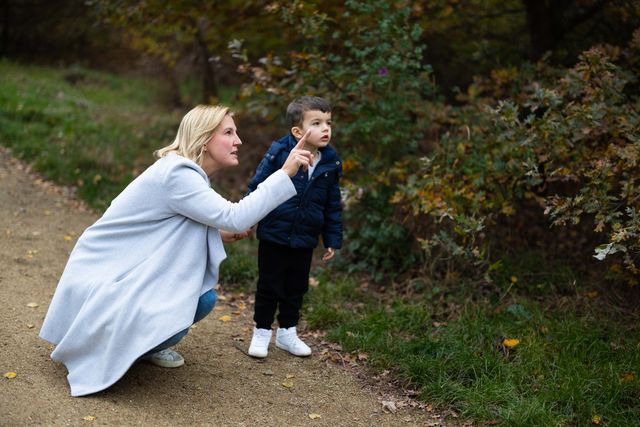
When you go outside there are a range of sounds, but you pointing out specific sounds will help your child to block out others, such as ‘oh listen I can hear a car…’ and then you point to the car. Or ‘I can hear a bird…’ then you point to the bird.
Some well-known books and songs feature environmental sounds such as Jill Murphy’s ‘Peace at Last’ and the song Old Macdonald, where the farm animals ‘moo’, ‘baa’ and ‘cluck’. Exaggerate these sounds and point the noises out when you hear them.
Clapping out syllables in a word or name
This can help your child to break down a word, a useful skill for when they go on to read and spell. Syllables are units of spoken language that contain a vowel sound. For example, there are three syllables in ‘Jess – i – ca’ and four in ‘croc – o – di – le’. Your child wont be able to do this to start with, it is something you can do and model.
Singing nursery rhymes and songs
Introducing your child to rhyming supports their phonological awareness. Many picture books such as ‘Shark in the Park’ by Nick Sharratt are written in rhyme and are enjoyable to read aloud. Some children will become so familiar with rhymes and stories they may be able to recite them independently.
Other picture books and songs may feature alliteration, where the first sound in a word is repeated, for example Dr Seuss’s ‘ABC – An Amazing Alphabet Book’ and ‘Dick the Delightful Duck’ by Kaye Umansky. Or the tongue twister ‘She Sells Seashells.’
You will notice that your child will learn and repeat rhyming songs and rhyming books because they are often spoken in a sing song manner and children learn these clusters of sentences quickly.
What’s in the bag?
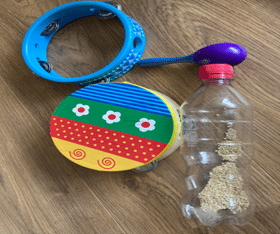
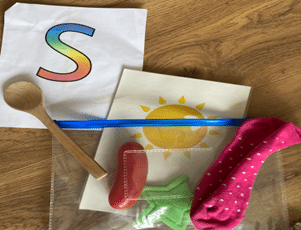
Hiding a variety of objects in a bag that make a noise, it could be some musical instruments, squeaky toy, some spoons a bottle with some water in it. Shake the object in the bag, the child will just have to use their listening ears to work out what the object might be.
Onset-rime
This is another concept you can play around with. A one syllable word typically has an ‘onset’ – the part before the first vowel, and a ‘rime’ – the rest of the word. For instance, in the word ‘dog’, ‘d’ is the onset and ‘og’ is the rime. You could say to your child, ‘Fill up the c – up’ or ‘Let’s go to b – ed’ and see if they recognise the word broken down in this way.

Please note:
- Pre-school children do not need to be taught technical terms such as ‘onset-rime’, it is more about playing around with language and having fun with spoken words
- Some speech sounds can be difficult for little ones to say and some such as ‘r’ are typically only acquired from the age of 5 – instead of correcting your child if they aren’t pronouncing it correctly, simply model the word back to them in the sentence
- If you are concerned about your child’s speech or hearing please contact your GP or your local Family Hub