
Play Preferences For Sensory Needs

We all know the 5 basic senses, Vision, Hearing, Touch, Taste and Smell but our bodies rely on 8! Things like movement, balance and muscle awareness often dictates how our children play.
Play is how children make sense of their world and lots of children may process information they take in from their surroundings a bit differently, than other children do.
This may be because they are often over or under responsive to certain sensations. The sensations children crave or avoid are called ‘sensory preferences’ Recognising what these are and working with them will help you to create situations that make it easier and more FUN for them to interact with you

Children generally fall into two categories:
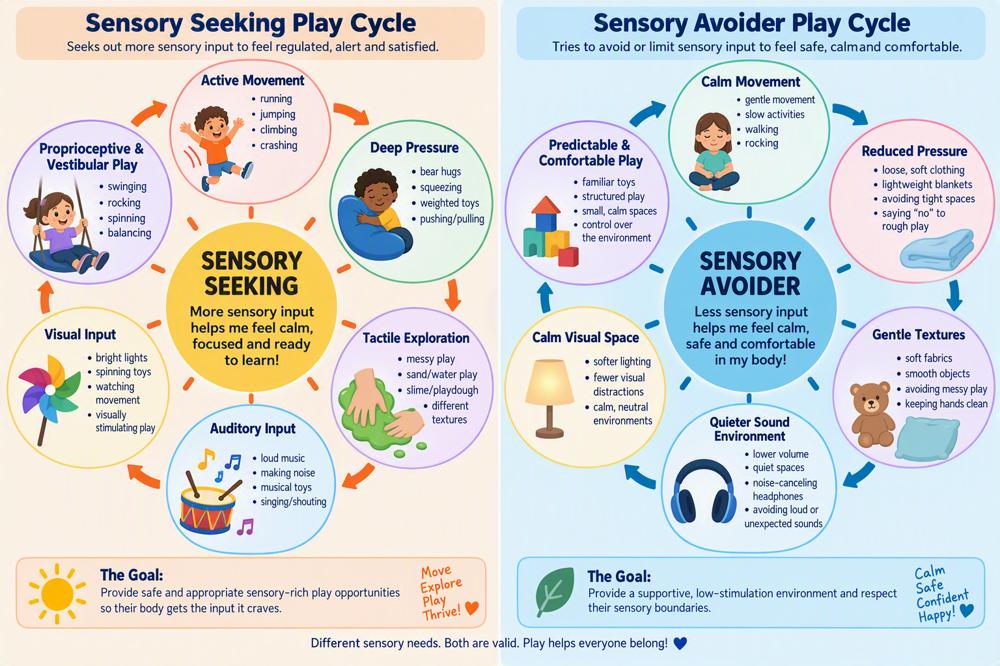
Sensory seekers
Are children who are craving more input through one or more of their senses so may prefer active movement, deep pressure, touch and texture, processing sounds and vestibular/proprioceptive play -this means activities that help children understand how their body moves and where it is in space. Examples include: Jumping, Swinging, Rocking, Spinning, Balancing, Climbing.
Sensory Avoiders
Are those who are easily overwhelmed by the information they take in through their eyes, ears, mouth, nose touch, movement, balance and internal signals. These children may prefer calm movement, reduced pressure, gentle textures, quieter sound environments, calm visual spaces, and predictable play opportunities.
Look at the play cycles to see what you can introduce to your child’s play time;
Do they prefer loud noises, big movement and exploration to engage in playful interactions? Or do they prefer calm, comfortable spaces that creates a feeling of security and confidence? Both sensory needs are valid and providing fun play experiences in responsive environments, helps children belong.
In Essex, the Talk, Listen, Cuddle campaign and the Early Years Sensory Awareness Toolkit both emphasise the importance of sensory‑rich, responsive experiences that place relationships at the heart of learning.