
Your day, your way!
As adults we understand the passing of time, what is coming next and when things finish. Most of us make use of a calendar to manage our day and help us to stay organised, plan events, and manage the unexpected.
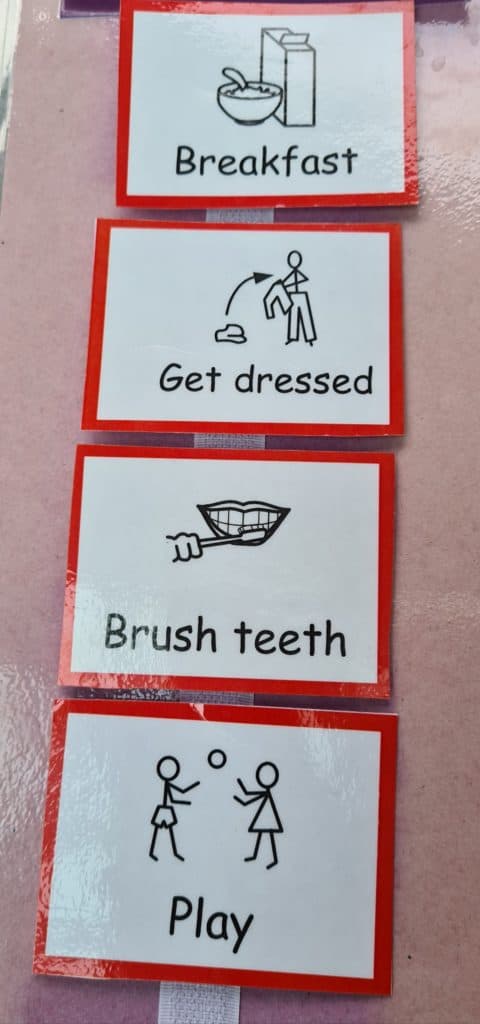
Your child is yet to learn about the passing of time or what is going to happen next. A visual timetable, or sequence cards, are tools that allow your child to see what they are doing now and be present, and also be prepared for what is going to happen after.

Visuals can help with:
- Breaking down routines and tasks
- Specific routines, for example washing hands and going to the toilet
- Understanding spoken words and processing information
- Listening to and remembering information
- Understanding the passing of time
- Having less anxiety related to change
- Enabling an opportunity to talk about activities that have already happened
- Communicating things that might be difficult to understand
- Increasing independence skills
Benefits of using visuals:
- Provide boundaries for planning activities and moving from one activity to another
- They are secure and do not disappear unlike words which are abstract
- They can attract your child and hold their attention
- Make concepts more understandable such as before, after, next
- Can be used as prompts and reminders
Top tips:
- Be patient: introducing anything new takes time, and visual timetables are not something your child will automatically use, so allow them time to familiarise themselves with it
- Now and then: start off with your child’s level of understanding, for example a simple ‘now and then’ timetable – this way your child can focus on what they are doing now, and then understand what is going to happen next (such as brushing their teeth)
- Use photographs: start off with photos of your child doing the activities, this way they can relate to the images
- Model the visuals: show your child how to use them, and keep repeatedly referring back to the pictures
- Be consistent: the more you use the timetable and refer to it, the more likely your child will eventually start referring to it themselves