
Filter Your Theme
Filter By Keyword
Filter By Developmental Stage
-
Role Play
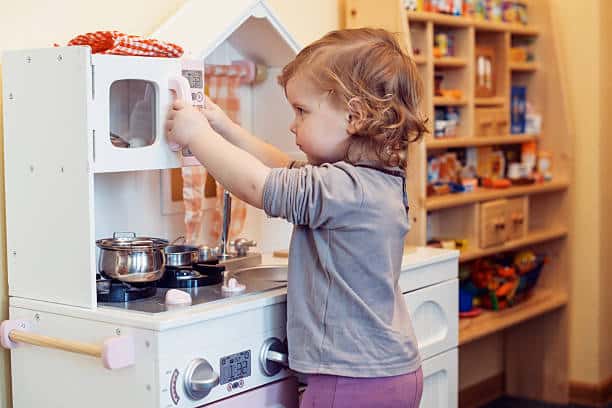
The land of make-believe! Role play can develop your child’s speech, language and communication skills and it can be an opportunity to play the same game over and over again to develop confidence. It involves the next stage of imaginative play, where your child is able to ‘become’ someone or something else. When participating in…
-

Imaginative Play
Imagination station! Imaginative play, or ‘symbolic’ play, is important because it suggests that your child understands that one object or picture can symbolise another, just as a word represents an object. During imaginative play, your child is beginning to understand the idea of symbols, which eventually leads to being able to think in abstract ways…
-

Exploratory Play
Collect, discover, explore! Play is important for language development and imaginative thinking. As children play they explore the world, and begin to understand more about how things around them work. Exploratory play is the first stage in play where your child will explore objects around them using their senses – hearing, sight, smell, taste and…
-

Types of Play
Playful minds! Play and language go hand in hand. Children need a wide range of play in order to develop their language skills. If your child’s language and communication skills are delayed, observation of their play can show a lot about their general development and readiness for language. It can also highlight which type of…
-
Following Your Child’s Lead
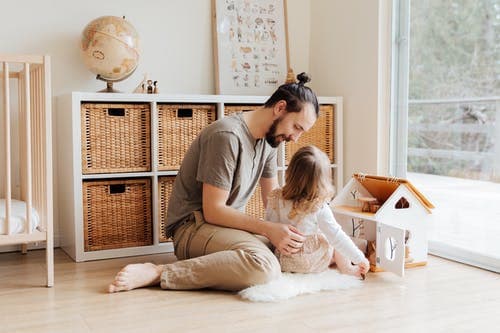
Little leaders! Children naturally have a need to explore and discover new things, so being led by your child can lead to exciting adventures! By following your child’s lead: Stop Look Respond
-
All About Play
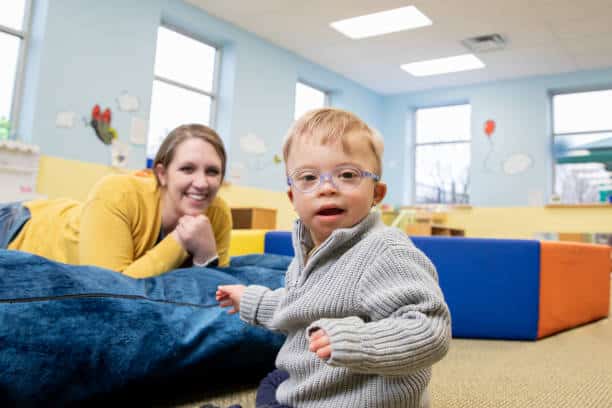
Playful minds! Play is about having fun, whether it be an organised activity or unstructured. It underpins your child’s learning and development, and helps them get ready for school. Play allows your child to explore their immediate world, recreate previous experiences, practise new ideas, take risks, solve problems and use their imagination – the learning…
-

Tummy Time
Tiny tummies on the move! Tummy time is when your baby spends time laying on their stomach while supervised. Your baby should never be left on their tummy unsupervised. Tummy time play has become an important part of development in recent years; this is because parents and professionals are now strongly advised to sleep babies…
-

Heuristic Play
Delightful discoveries! Heuristic play is a way your child can explore the world that surrounds them, to find meaning in it, and to feel some control over it. It allows your child to experiment with objects and the environment. Heuristic play is typically suited to more mobile babies/toddlers approaching their second year (18-24 months). Why…
-
How Children Learn
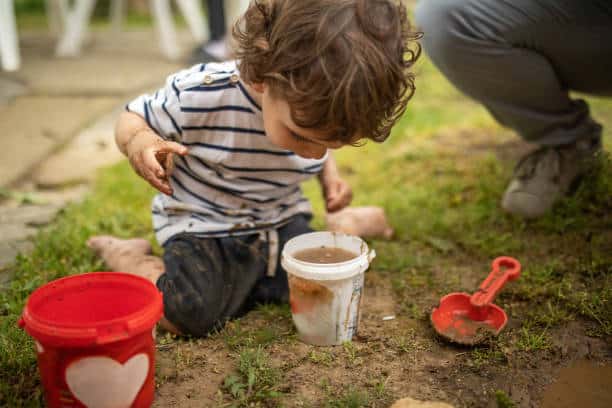
The different ways young children learn! Children learn in many different ways to one another. Your child may choose their preferred way of learning – such as being active – and that is part of their personality. Offering various experiences to your child allows them to learn different things and a range of skills, including…
-
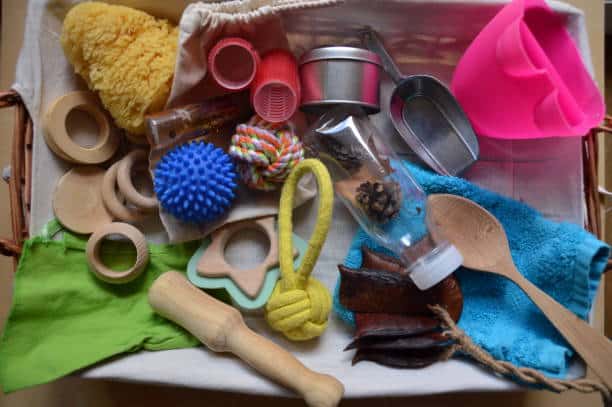
Treasure Baskets
Tiny treasures and sensory surprises! Treasure baskets are a collection of day-to-day materials that are natural and offer stimulation to the five senses – hearing, sight, smell, taste and touch. Treasure baskets aid exploration, curiosity and concentration, as well as enabling brain development during interaction with the treasures. Developed by Elinor Goldschmied, the idea of…
-

Raising Bilingual Children
The gift of language! The language you speak with your child is the first language they will learn. It is their first connection to you, to the rest of their family, and to their culture and community. Home language is what your child will first use to learn about the world around them and helps them get ‘set for life’ – you…
-

Tools for School
Stepping into school! Lots of parents ask us ‘how can I help my child get ready for school?’ The truth is you have been doing it since the day they were born, with the cuddles and kisses you’ve given, the songs you’ve sang, the books you’ve read and games you’ve played. All these experiences have…
-

Read With Me Under a Tree
A celebration of rhymes, books and the great outdoors! In Summer 2023, we teamed up with Essex Libraries and Essex Country Parks to bring you ‘Read With Me Under a Tree’ borrow bags. The bags included story books, a themed activity sheet and den building kit to help you get outside and have fun! To…
-

Tiny Tinkering
Babies exploring their curiosity! Your baby is curious about our world and can’t wait to explore. Babies apply their current favourite methods of physical exploration regardless of the object. Your baby’s actions are powered by curiosity and the delight of physical sensations. You can still ‘tinker’ when you are under 12 months old! These are…
-

Talking to Your Pre-Schooler 3-4 Years
Your child learns to talk every time you talk to them! Your child changes at each stage of their development, and in turn your role as a parent develops with how to support their language and communication skills. As you notice changes in your child, you will notice changes in yourself. Top tips: