
Filter Your Stage
Filter By Keyword
Filter By Prime Area
Filter By Specific Area
-

Using Gestures
Handy talk! Gestures and visual supports help to reinforce information that is given verbally during play or instructions. They can help your to child understand, make choices, know what to expect in a given situation, and learn new words. Top tips:
-

Talking With Your Toddler Webinars
Speech and Language UK is a children’s communication charity. Speech and Language UK are offering free webinars for parents of children aged 12 months to 4 years who are concerned about their child’s talking and understanding of words. They offer seven different themed webinars which are led by an experienced speech and language therapist. Each…
-

Supporting Your Child’s Speech and Language Development
Your very own talking toolkit! It makes a huge difference when family members support their child’s speech, language and communication at home. In this recorded webinar we share how speech, language and communication develops, and how adults can support this development during everyday experiences. We share our Talk, Listen, Cuddle Top Ten Talking Tips – these…
-

Language Focused Play
Working together with words! Language focused play is a part of the day when your child has your full attention, and gives them an opportunity to control their play without direction from an adult. By building this into your daily routine, you are able to fully focus on your child’s play and allow them to…
-

Loose Parts Play
Building with bits and bobs! The idea of ‘loose parts’ has influenced child play experts and has allowed us to explore different ways children learn. Loose parts are materials that can be moved, carried, lined up, taken apart and put back together in multiple ways! Loose parts in the environment will empower the creativity and…
-

Water Play
The wonders of water! Water is fascinating to children and is appropriate to all ages. Many children like playing with water whether it’s jumping in puddles, splashing in the sink when washing their hands, playing at bath time or having fun in a paddling pool! Water play can be a sociable occasion and exciting, or…
-

Makaton
Say it, sign it! Makaton is a language programme made up of symbols and signs that accompany speech, and is shared with young children to support early speech and language development. Research shows us that using gestures and signs when we are talking and singing helps children with their understanding and to learn new words.…
-
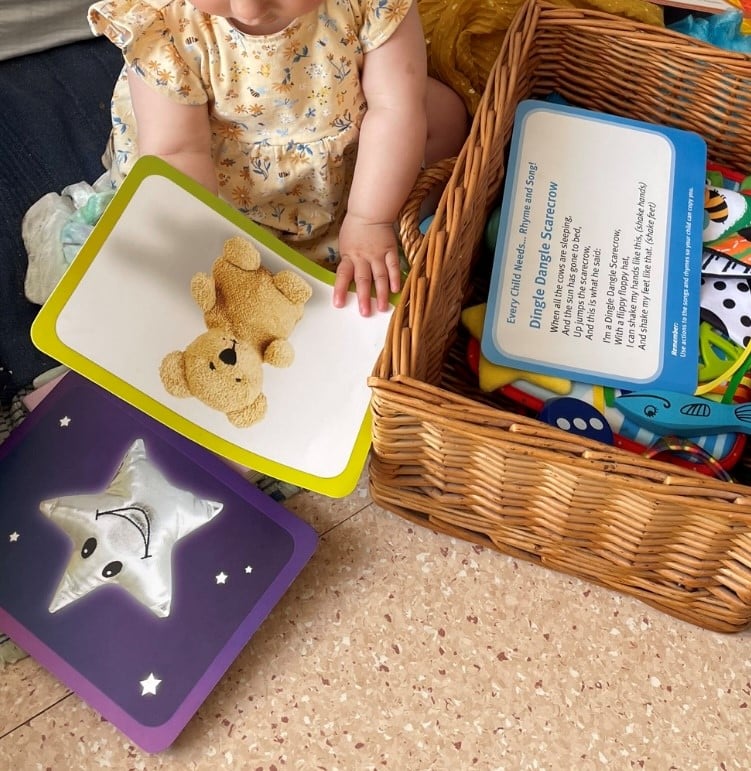
Rhyme Time Sacks
Research shows that children who know 8 nursery rhymes by heart at age 4, are likely to be more confident at spelling and reading by age 8! Singing nursery rhymes is a is a lovely activity to help bond with your baby, and later on, a great way of building your child’s vocabulary. A ‘rhyme…
-

Interactive Books
Little readers, big adventures! Exploring books with your child at the earliest point helps develop their communication and language skills, for example – taking turns in a conversation, eye contact, listening and attention skills, and building vocabulary. Interactive books are books with flaps, tabs, feely materials, or sound panels. They are great for babies and…
-

Visual Timetables
Your day, your way! As adults we understand the passing of time and what is coming next. Most of us use a calendar to help us to stay organised, plan events, and manage the unexpected. Your child is yet to learn about the passing of time or what is going to happen next. A visual…
-

Attention and Listening Activities
Ready to listen and learn! Making quiet time for you and your child to play a game with no distractions can really help build their attention span and listening skills. Each child’s attention and listening skills are different, so follow your child’s needs and interests. Choosing an activity with your child based on what they…
-

Attention and Listening
Ready to listen and learn! One of the best way to help your child develop good attention and listening skills is by spending quality time together without distractions. This only has to be five-ten minutes each day and can take place anywhere – while out and about, at home, and during routines such as bedtime.…
-
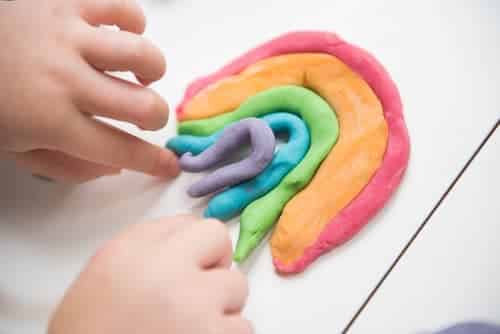
Homemade Playdough
Dough it yourself! Playdough can be made very easily using ‘ingredients’ that you have at home, and this simple activity has many benefits. Before your child can hold a pen and learn to write, they need to strengthen and learn to control the muscles in their hands. Playdough is the perfect activity to exercise little…
-

Homemade Fluffy and Cloud Dough
Dough it yourself! The real wonder of playdough is how everyone wants to play with it! Just make the dough and watch how adults and older children are also attracted to this ‘in the moment’ sensory activity. Kneading, squashing, squeezing and rolling brings calm and enjoyment to all ages! Fluffy playdough recipe What you need:…
-

Essex Child and Family Wellbeing Service
The focus of this service is making sure that everyone in Essex has the best possible start in life through meeting the identified needs of children, young people and families. The Healthy Family Team offer routine contacts to ALL families living in Essex within the first 3 years. These are as follows: These visits will…