
Filter Your Stage
Filter By Keyword
Filter By Prime Area
Filter By Specific Area
-

Vertical Surface Play
Straight up fun! Vertical surface play involves engaging with activities on a vertical surface, such as a wall, whiteboard or fridge. It has many developmental benefits for all children, and it’s never too early to introduce it to your baby or child! It can help to improve: Top tips:
-

Cloth Nappies
Planet friendly pants! Did you know that in the UK around 8 million disposable nappies go to landfill each year? A disposable nappy can take an estimated time of 300-500 years to break down; in that time, harmful chemicals and gases such as methane are released, contributing to global warming. Using cloth nappies can seem…
-

Sing, Sparkle, Smile
Make tooth brushing a daily adventure! We know that getting your little ones to brush their teeth can sometimes be challenging, so we’ve got some top tips to make it fun rather than a chore! Top tips: Here are some helpful resources for you to view and download: Essex Libraries Looking After Your Teeth Booklist:…
-

Oral Health
Tip top teeth! Oral health is all about looking after your mouth and teeth, no matter your age, as part of your general health and wellbeing. Taking care of baby teeth is essential for a child’s health and development, and there are lots of resources out there to help! What you need to know: Here…
-

Essex Family Information Service
The Essex Family Information Service (FIS) is a free and impartial service for parents and carers. The FIS includes lots of information to help you find out about local services for babies, children and young people. There are also links to extra help and services that are available if your child has a Special Educational…
-

Developing Language in Nature
Nattering in nature! The best thing about being in nature is it instinctively promotes language! Firstly, being in nature helps your child develop their listening skills. They learn to tune in to the sounds around them, like birds chirping, leaves rustling, or waves lapping. This careful listening is crucial for language development, as it helps…
-

Nature Play
Wild and wonderful! Young children love to be outdoors and they usually head to a garden, playground, or park. These places are well-kept, with trimmed grass, cleared weeds, and tidy equipment. These spaces are great for children to play, run around, take risks, and develop their senses. But ‘outdoor play’ isn’t always the same as…
-
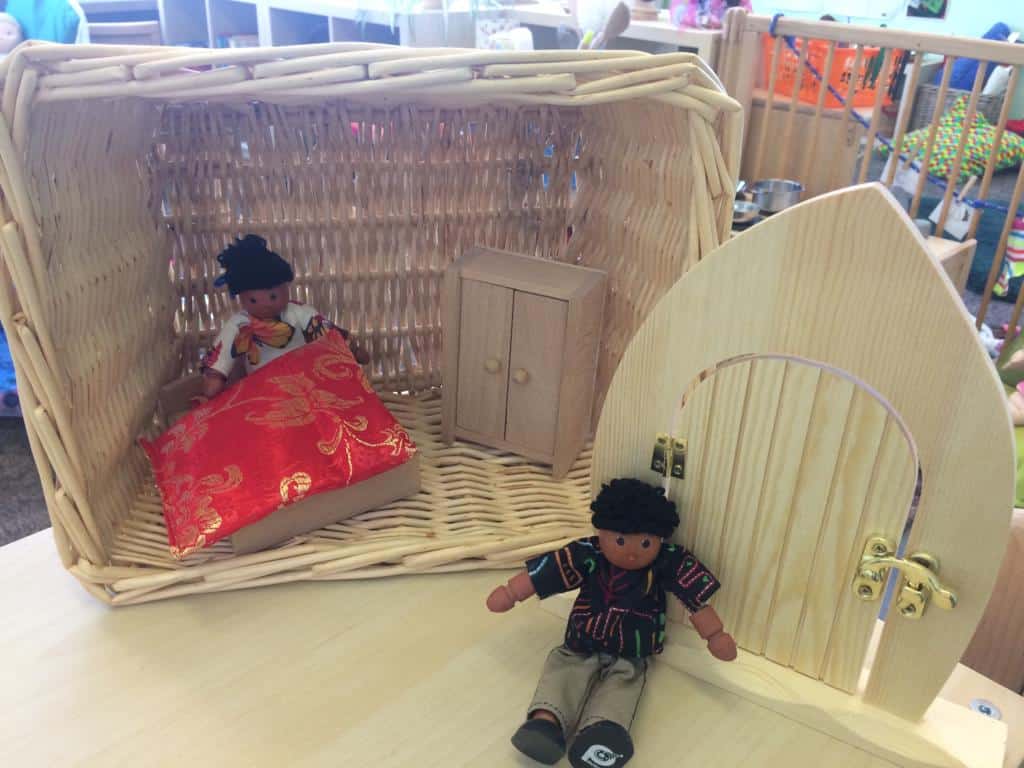
Small World Play
It’s a small world! Small world play is a type of imaginary play that uses small toys and props to help your child to act out scenes from their daily life, or create fantasy worlds of their own! This type of play provides your child with opportunities to develop ideas, concepts such as size and…
-
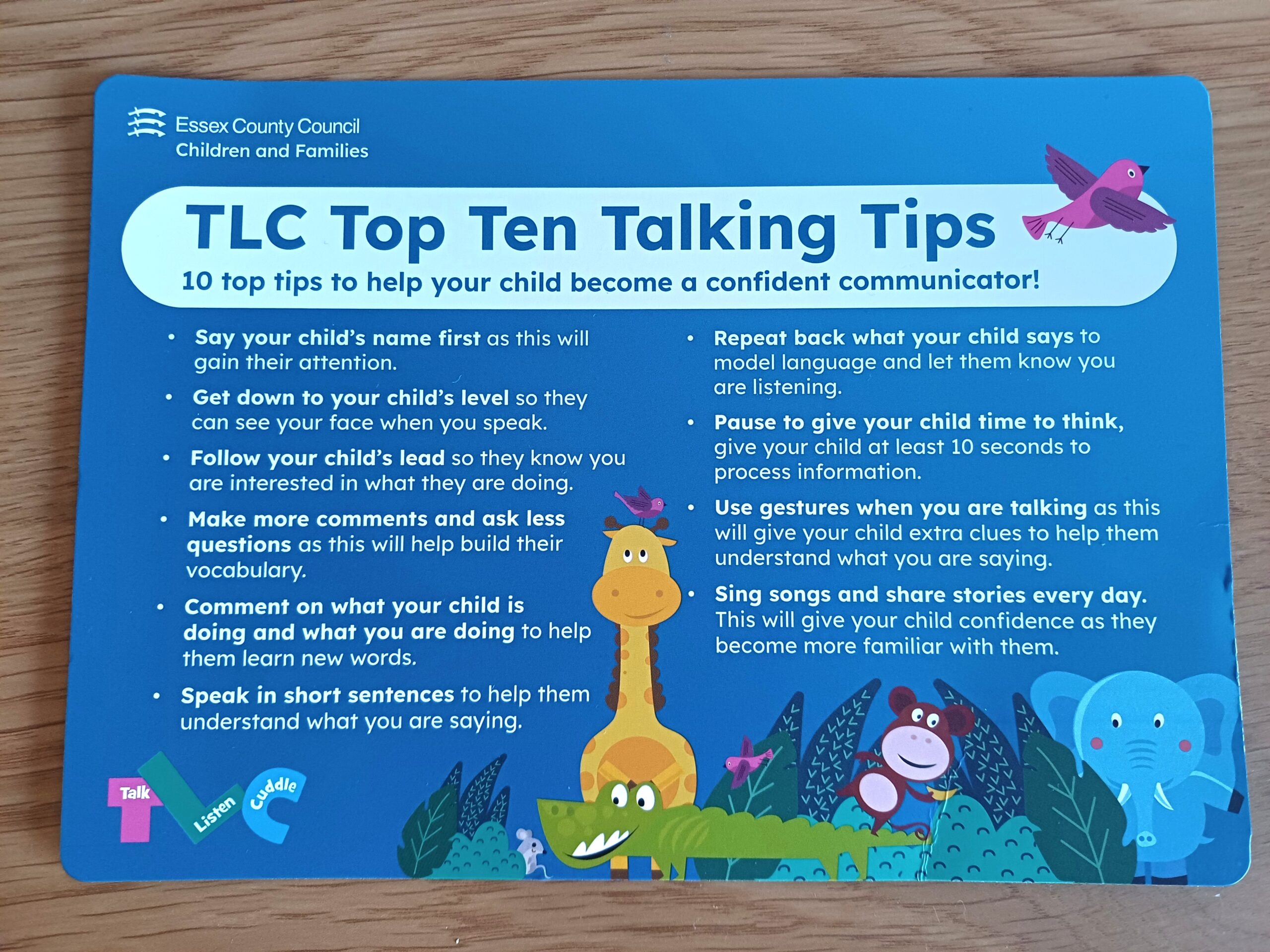
Talk, Listen, Cuddle Top Ten Talking Tips
10 top tips to help your child become a confident communicator! 1. Say your child’s name first as this will gain their attention 2. Get down to your child’s level so they can see your face when you speak 3. Use gestures when you are talking as this will give your child extra clues to…
-

Talk, Listen, Cuddle Number Rhyme Cards
Research shows that children who know 8 nursery rhymes by heart at age 4, are likely to be more confident at spelling and reading by age 8! To celebrate the Essex Year of Numbers we designed new rhyme cards! There are 5 rhymes that are all based around numbers – you might notice some of…
-

Talk, Listen, Cuddle Counting Book
Count along with me, what can you see? To celebrate the Essex Year of Numbers, we created a counting and rhyming book all about numbers and shapes! The rhyming sentences not only make the book fun, they will help your child develop new vocabulary and building longer sentences. It is the perfect size for your…
-

Talk, Listen, Cuddle Height Chart
The height chart with a difference! Children love learning about how they have changed and how much they have grown, and we all know that children change and grow very quickly! Celebrating this with your child feels really special. We have created a Height Chart so you can share the changes with your child. You…
-

Setting Boundaries
Kind lines, clear minds! Setting boundaries for your child – and sticking to them – can feel very challenging. Often parents/carers worry that they will upset their child unnecessarily or wonder if they are being too strict or even if their child will still like them if they say ‘no’. With lots of different views…
-

Park Play
Swing, skip, slide! Parks and playgrounds help your child’s development in so many ways, and sharing the experience alongside your child is a perfect opportunity to build their confidence and vocabulary! Benefits: Top tips:
-

Exploring Books
Little readers, big adventures! Explore books with your baby or child every day if you can; this is a special time where you can have have a shared moment of interest. Babies love hearing you read even if they don’t understand the story! Children often enjoy hearing the same book over and over again; this…